Food choices are the decisions people make about what to eat, and they can affect land, water, energy use, greenhouse-gas emissions, and biodiversity. Teaching children about these connections means helping them understand how food is grown, processed, transported, eaten, and wasted—without making them feel guilty about what is served at home. The Food and Agriculture Organization of the United Nations estimates that food systems account for about one-third of human-caused greenhouse-gas emissions, while the United Nations Environment Programme reports that households and food services generate substantial food waste. Age-appropriate lessons about climate impact, farming, nutrition, and waste can help children make informed choices and take practical action.
Teaching children how food choices affect the environment
Environmental food education connects everyday meals with the natural resources and systems behind them. Its purpose is not to label foods as “good” or “bad,” but to show that different foods have different impacts—and that health, culture, affordability, access, and personal circumstances matter too. Lessons work best when children can investigate real examples, such as comparing seasonal produce, visiting a garden, or finding ways to prevent edible food from being thrown away.
Food-choice education explains environmental impact
Food-choice education is a form of environmental learning that helps children understand how producing and consuming food affects ecosystems and resources. The Food and Agriculture Organization describes sustainable diets as diets with low environmental impacts that contribute to food and nutrition security and healthy lives for present and future generations. In practice, this means teaching children to consider several connected factors rather than judging a meal by one feature alone.
The food system includes farming, fishing, manufacturing, packaging, transport, retail, cooking, and disposal. The FAO estimates that agrifood systems produced roughly one-third of global human-caused greenhouse-gas emissions in 2019. This system-wide estimate is not the footprint of any single meal, but it helps explain why food is a meaningful subject for climate and environmental education.
Climate impact and food production
Climate impact refers to the greenhouse gases released across a food’s life cycle, including emissions from land use, farming, processing, transport, and disposal. Children can learn that foods differ in their typical footprints, while also learning that production methods and location matter. Research published in Science by Joseph Poore and Thomas Nemecek analyzed 38,700 farms and 1,600 processors, packaging types, and retailers. It found that impacts vary considerably among producers making the same products, and that animal-based foods—particularly beef and lamb—often have higher emissions and land-use impacts than many plant-based foods.
A useful classroom activity is to compare a few familiar meals by ingredients and ask what information would be needed for a fair comparison. Avoid implying that one number captures every environmental effect: greenhouse gases, water use, land use, and biodiversity are related but distinct measures.
Land, water, and biodiversity
Land and water impacts describe the resources used to grow crops and raise animals, while biodiversity concerns the variety of life and habitats affected by production. The United Nations Environment Programme has highlighted agriculture as a major driver of habitat change and pressure on nature. Children can explore these links through questions such as whether a food needs a lot of land, how irrigation affects water availability, and how farming practices can support pollinators and healthy soil.
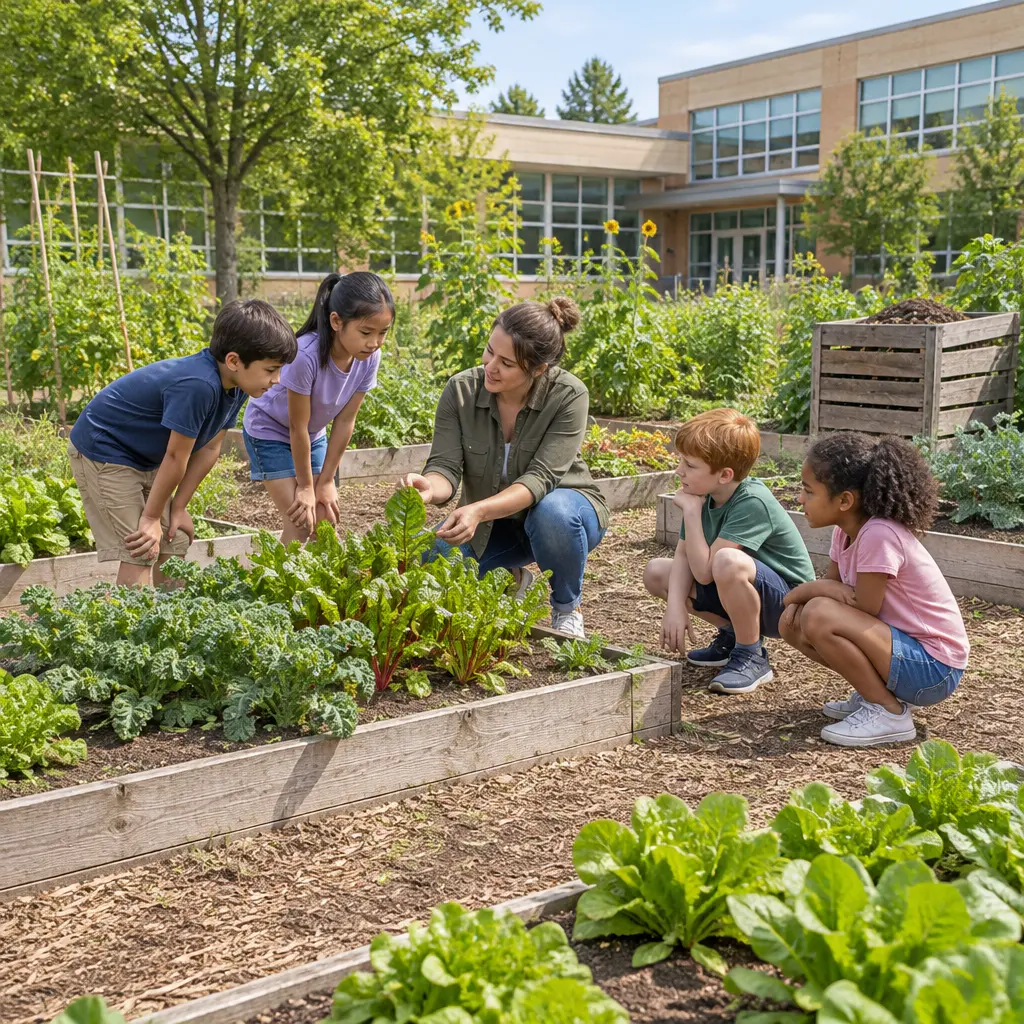
Teach comparisons carefully: water-footprint estimates depend on where and how food is produced, and “water use” may distinguish rainwater from water drawn from rivers or groundwater. A school garden, seed-growing project, or visit to a local farm can make soil, growing seasons, and habitat visible without suggesting that every family can access the same foods.
Packaging, processing, and transport
Food’s environmental footprint also includes what happens after harvest. Processing can require energy and materials; packaging can protect food and extend shelf life, but may create waste; and transport contributes emissions. The relative importance of each factor varies by product. For many foods, production has a larger climate impact than transport, so “eating local” is not automatically the lowest-impact option in every case.
Children can compare a locally grown seasonal fruit with an out-of-season product shipped or grown under energy-intensive conditions, then discuss what they do and do not know. This teaches evidence-based thinking: distance is one clue, not a complete environmental score.
Food-waste learning turns awareness into action
Food-waste education teaches children to prevent edible food from being discarded and to understand what happens to scraps that cannot be eaten. The United Nations Environment Programme’s Food Waste Index Report 2024 estimates that 1.05 billion tonnes of food were wasted worldwide in 2022 across households, food service, and retail—about 19% of food available to consumers. The report estimates that households accounted for 60% of this measured waste.
These global figures provide context, not a way to blame individual children or families. Food waste can result from shopping and portioning systems, confusing date labels, storage limitations, and other circumstances. Lessons should focus on practical prevention and respect for food, while recognizing that food safety always comes first.
Preventing avoidable food waste
Avoidable food waste is food that could have been eaten but is discarded. Children can help plan portions, store food appropriately with adult guidance, use leftovers safely, and record what is regularly left uneaten. A simple classroom “waste audit” can sort and weigh discarded items over a set period, while keeping the activity nonjudgmental and following school hygiene rules.
The U.S. Environmental Protection Agency recommends preventing food waste as a priority because avoiding waste also avoids the resources and emissions used to produce, transport, and prepare that food. Composting can be useful for unavoidable scraps, but it does not replace preventing edible food from becoming waste.
Composting and responsible disposal
Composting is the managed breakdown of organic material into a soil-supporting product. It can divert suitable food scraps from disposal and return nutrients to soil, depending on local collection systems and composting conditions. Children can learn to separate compostable scraps from packaging and understand that accepted materials vary by community or school program.
A school compost bin or community garden can demonstrate decomposition and soil health. Where composting is unavailable, educators can still teach waste prevention, food sharing through approved programs, and following local disposal guidance.
Practical teaching builds informed and inclusive habits
Effective teaching links environmental evidence to activities children can understand and influence. It should also protect children from shame or anxiety: no single child is responsible for solving climate change, and families have different budgets, traditions, dietary needs, and access to food. The goal is knowledge, curiosity, and shared problem-solving.
Hands-on lessons and real-world examples
Hands-on learning makes food systems tangible. A class can grow herbs, map the journey of a school lunch ingredient, compare seasonal foods, or interview cafeteria staff about purchasing and leftovers. These projects connect environmental concepts with agriculture, geography, science, cooking, and community knowledge.
For example, a school that measures lunch waste can use the results to adjust serving sizes, offer appropriate seconds, or improve menu feedback. The value of the exercise is not simply a smaller waste total: children see how observation and cooperation can improve a system.
Age-appropriate, culturally respectful guidance
Age-appropriate guidance uses concrete experiences with younger children and increasingly complex evidence with older students. Younger learners might sort food scraps and discuss plant growth; older learners can compare life-cycle data, examine uncertainty, and debate trade-offs. Across ages, lessons should include familiar foods from students’ cultures and avoid presenting one cuisine or diet as universally ideal.
Environmental suggestions should not override medical advice, allergies, religious practice, or nutritional needs. Adults can emphasize flexible actions—such as reducing waste, choosing seasonal options when accessible, and exploring more plant foods where suitable—rather than prescribing a specific diet.
Using charts and data responsibly
A simple chart can help children compare foods across separate measures, such as estimated greenhouse-gas emissions, land use, or water use. Label the source, unit, year, and scope of each figure, and explain that results vary with production methods and location. A useful visual is a “food journey” diagram showing farm, processing, transport, meal, and waste stages, alongside a chart that distinguishes climate impact from other environmental measures.
Data should support questions, not create false certainty. Students can ask who collected the information, what was included, and what remains unknown. This helps build media literacy alongside environmental understanding.
Conclusion: food education supports healthier systems
Teaching children how food choices affect the environment means explaining climate impacts, land and water use, biodiversity, packaging, transport, and food waste as connected parts of a larger system. Research from the FAO, UNEP, and other institutions shows that food systems have significant environmental impacts, while also revealing opportunities to reduce waste and make informed choices. Schools and families can begin with practical, inclusive activities—growing food, discussing evidence, planning portions, and learning local composting rules. Help children stay curious, respect different circumstances, and see environmental care as a shared effort rather than a burden placed on individuals.
Sources: Food and Agriculture Organization of the United Nations, “Sustainable Diets and Biodiversity,” https://www.fao.org/3/i3004e/i3004e.pdf; Food and Agriculture Organization of the United Nations, “Greenhouse Gas Emissions from Agrifood Systems: Global, Regional and Country Trends, 2000–2022,” https://www.fao.org/interactive/sdg2/agrifood-systems-emissions/en/; Poore, Joseph, and Thomas Nemecek, “Reducing Food’s Environmental Impacts through Producers and Consumers,” Science, 2018, https://www.science.org/doi/10.1126/science.aaq0216; United Nations Environment Programme, Food Waste Index Report 2024, https://www.unep.org/resources/publication/food-waste-index-report-2024; U.S. Environmental Protection Agency, “Wasted Food Scale,” https://www.epa.gov/sustainable-management-food/wasted-food-scale; United Nations Environment Programme, “Food Systems and Biodiversity,” https://www.unep.org/topics/biodiversity/food-systems