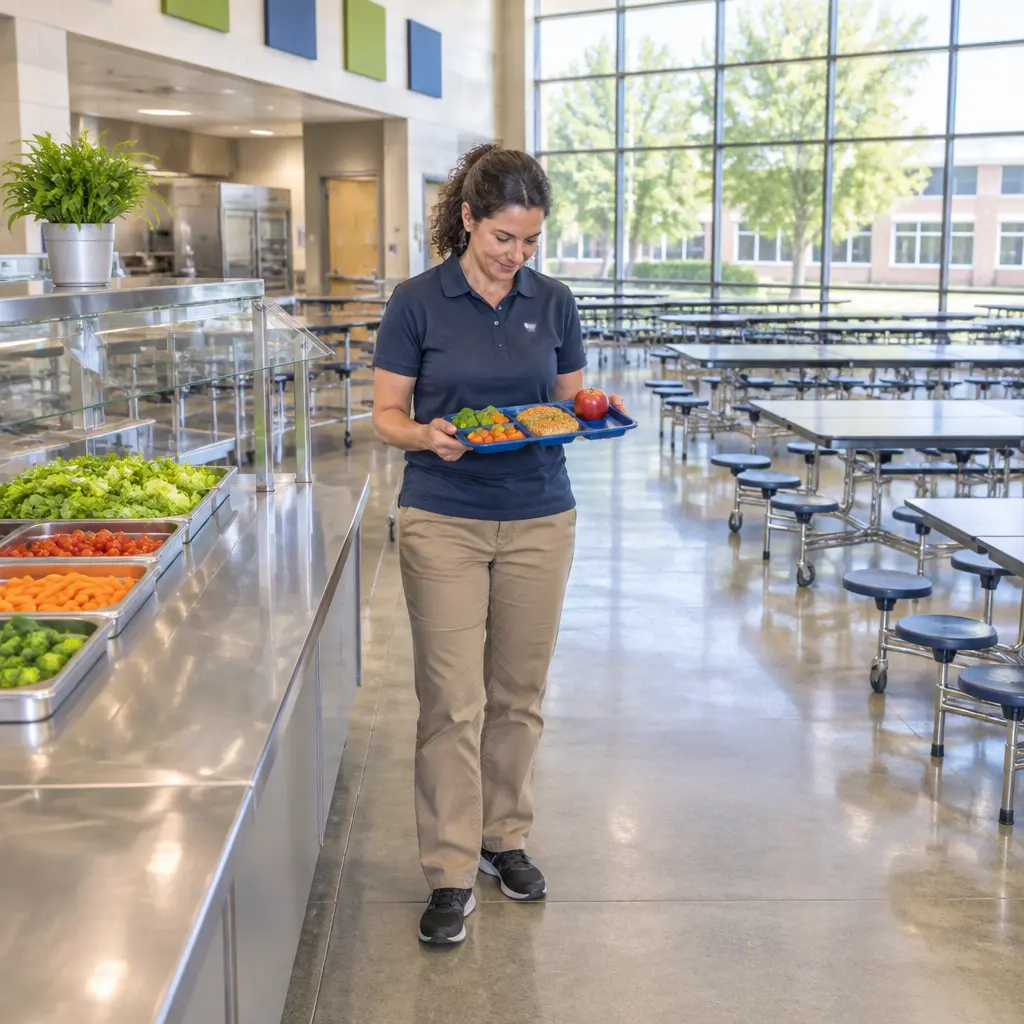
School cafeteria food quality is the nutritional value, safety, appeal, and practical availability of the meals served to students. Raising that quality means more than adding fresh produce: schools must serve appealing meals that meet federal nutrition standards, accommodate students’ needs, and fit within staffing and budget constraints. The stakes are significant: the U.S. Centers for Disease Control and Prevention reports that about one in five U.S. children and adolescents has obesity, while school meals reach millions of students each day. Stronger standards can make cafeterias an important setting for supporting health, learning, and equitable access to nutritious food.
Define food quality standards for school cafeterias
Food quality standards are criteria used to assess what meals contain, how safely they are prepared, and whether students can and will eat them. The U.S. Department of Agriculture (USDA) sets nutrition requirements for meals reimbursed through the National School Lunch Program and School Breakfast Program; quality improvement also includes procurement, preparation, student experience, and minimizing waste. These connected dimensions matter because a meal can meet nutrient limits on paper yet fail to nourish students if it is unappealing, unavailable, or discarded.
Nutrition and meal-pattern standards
Nutrition standards specify the components and limits that help make school meals balanced. USDA meal patterns include fruits, vegetables, grains, milk, and—in lunch—meat or meat alternatives, with requirements for weekly variety and limits on sodium, saturated fat, and added sugars. USDA’s final rule published in 2024 phases in updated limits, including added-sugar standards for certain foods and gradual sodium reductions. Schools should check the applicable implementation schedule and local guidance rather than assume every new limit takes effect at once.
Food safety and preparation standards
Food safety standards protect students from contamination through safe purchasing, storage, preparation, and service. USDA requires participating school food authorities to maintain food-safety programs based on Hazard Analysis and Critical Control Point principles and to conduct food-safety inspections. The U.S. Food and Drug Administration’s Food Code provides a model for retail food safety, while state and local authorities determine applicable requirements. Fresh, minimally processed ingredients can support quality, but they require appropriate equipment, training, and controls to remain safe.
Food appeal, access, and acceptability
Acceptability describes whether students find meals appealing and are able to obtain and eat them. Taste, familiarity, cultural relevance, serving time, dining conditions, and accommodations all shape whether nutritious food is consumed. The USDA’s School Nutrition and Meal Cost Study found that most lunches served in participating schools met standards for overall nutritional quality, while also documenting differences in food selection and consumption. This distinction is important: meal quality should be evaluated both by what is offered and by what students actually eat.
Improve school cafeteria food quality through procurement and menus
Once standards are defined, districts can improve the food itself through thoughtful purchasing and menu design. Procurement choices determine which ingredients kitchens can access, while menu planning translates nutrition goals into meals students recognize and enjoy. The two approaches work best together: a local ingredient or healthier recipe adds little value if it cannot be prepared consistently or is routinely left uneaten.
Buy nutritious, minimally processed ingredients
Nutrition-focused procurement prioritizes ingredients that support balanced meals while accounting for cost, storage, kitchen capacity, and reliable supply. Districts can compare products using ingredient lists, nutrition facts, portion costs, and specifications for whole grains, produce, and lower-sodium options. USDA Foods provides domestically produced foods to participating school meal programs, and the USDA Farm to School Census documents districts’ use of local foods, agriculture education, and school gardens. Local purchasing can strengthen regional connections, but it should be planned around seasonal availability and food-safety requirements.
Design appealing menus and culturally responsive meals
A high-quality menu balances nutrition with variety, familiarity, and cultural relevance. Schools can rotate student favorites alongside new dishes, offer flavorful vegetables, use herbs and spices to reduce reliance on salt, and provide meals that reflect the communities they serve. Federal requirements allow menu planners to work within defined meal components, but implementation should also consider allergies, religious practices, medical needs, and the availability of appropriate substitutions. Student tastings and feedback can reveal whether a recipe works in the cafeteria, not just in a test kitchen.
Use scratch cooking where it is practical
Scratch cooking means preparing dishes from basic ingredients, while speed-scratch approaches combine prepared components with fresh ingredients or in-house finishing. Either can improve flavor and ingredient control when matched to staff skills and kitchen equipment. The USDA’s School Nutrition and Meal Cost Study found that labor and food costs are major components of school meal operations, underscoring why districts should assess staffing, training, equipment, and time before expanding scratch preparation. A phased approach—such as preparing sauces or vegetables in-house—can build capacity without disrupting service.
Strengthen cafeteria operations and student participation
Better ingredients and recipes require an operational system that makes nutritious choices convenient and reliable. Service schedules, cafeteria layout, staff training, and student participation all affect meal quality in practice. These factors also determine whether districts can sustain improvements over time.
Make healthy choices easy to select
Cafeteria design can guide choices by making fruits, vegetables, and appealing entrées visible and easy to reach. Strategies include placing produce prominently, offering sufficient time to eat, using clear menu descriptions, and arranging service lines to reduce congestion. The CDC’s School Health Guidelines to Promote Healthy Eating and Physical Activity recommend coordinated school approaches that support healthy eating environments. Schools should test layout changes and measure participation and food waste, since presentation alone does not guarantee consumption.
Train and support nutrition staff
School nutrition professionals turn standards into safe, consistent meals. Training in food safety, recipe scaling, cooking methods, allergen management, and customer service can help teams deliver quality across shifts and campuses. Districts should also involve staff in menu development and provide the equipment and time required for new procedures. Because staffing and operating costs constrain many programs, improvement plans should budget for professional development and realistic workloads rather than relying on unpaid or unsustainable effort.
Partner with students, families, and communities
Student and family engagement helps schools identify barriers that nutrition data alone may miss. Taste tests, surveys, student advisory groups, and family feedback can inform recipes, cultural representation, and service practices. The USDA Farm to School program offers a framework for connecting meals with local agriculture, gardens, and food education. These partnerships can make quality improvements more relevant while building students’ understanding of food and nutrition.
Measure cafeteria food quality and reduce waste
Measurement shows whether an improvement meets its intended goal. Districts should track compliance, participation, student satisfaction, food safety, costs, and plate waste together. Considering several indicators prevents a narrow success measure—such as purchasing more produce—from obscuring whether students eat it or whether the program remains financially workable.
Track nutrition, participation, and cost
A practical evaluation dashboard can include menu compliance, meal participation, ingredient costs, student feedback, and the frequency of menu substitutions. USDA’s School Nutrition and Meal Cost Study provides national evidence on meal quality, participation, and program finances; local results will differ by district. Schools can compare results by grade level or school site while protecting student privacy, then use the findings to revise recipes and purchasing plans.
Use plate-waste audits to improve meals
A plate-waste audit measures food served and discarded, helping schools identify meals or components students do not consume. The U.S. Environmental Protection Agency recommends measuring food waste as a starting point for prevention. Schools can conduct repeated audits before and after a menu or presentation change, separating food categories where feasible. Results should prompt investigation rather than automatic removal: waste may reflect taste, portion size, rushed lunch periods, or students’ limited opportunity to save unopened items.
Protect equity and meal access
Food quality depends on whether students can access meals regardless of household income, disability, language, or dietary need. The Community Eligibility Provision allows eligible high-poverty schools and districts to serve breakfast and lunch at no charge to all enrolled students, reducing household payment barriers. USDA’s 2024 nutrition rule also addresses meal standards and implementation over time. Districts should communicate eligibility and menus clearly, provide required accommodations, and monitor participation so quality improvements reach the students they are intended to serve.
Conclusion: Make food quality a sustained school priority
Raising food quality standards in school cafeterias means aligning nutrition and safety requirements with appealing menus, capable kitchen operations, equitable access, and evidence-based evaluation. USDA meal patterns provide a foundation; thoughtful procurement, student-centered menu design, staff investment, and waste audits help turn that foundation into meals students value and eat. School leaders can begin by reviewing current menus and waste data, involving students and nutrition staff, and setting measurable goals with realistic funding and timelines. Families and communities can support the effort by engaging with school meal programs and asking districts to report both meal quality and student experience.
Sources: U.S. Department of Agriculture, Child Nutrition Programs: Income Eligibility Guidelines and Community Eligibility Provision, https://www.fns.usda.gov/cn/community-eligibility-provision; U.S. Department of Agriculture, Child Nutrition Programs: Meal Patterns, https://www.fns.usda.gov/cn/meal-patterns; U.S. Department of Agriculture, Child Nutrition Programs: Final Rule—Child Nutrition Programs: Meal Patterns Consistent With the 2020–2025 Dietary Guidelines for Americans, https://www.fns.usda.gov/cn/fr-042524; U.S. Department of Agriculture, School Nutrition and Meal Cost Study, https://www.fns.usda.gov/research/cn/school-nutrition-and-meal-cost-study; U.S. Department of Agriculture, Farm to School Census, https://farmtoschoolcensus.fns.usda.gov/; U.S. Department of Agriculture, Food Safety Inspection Requirements, https://www.fns.usda.gov/cn/food-safety; U.S. Centers for Disease Control and Prevention, Childhood Obesity Facts, https://www.cdc.gov/obesity/data/childhood.html; U.S. Centers for Disease Control and Prevention, School Health Guidelines to Promote Healthy Eating and Physical Activity, https://www.cdc.gov/healthyschools/npao/strategies.htm; U.S. Environmental Protection Agency, Preventing Wasted Food, https://www.epa.gov/sustainable-management-food/preventing-wasted-food-home; U.S. Food and Drug Administration, FDA Food Code, https://www.fda.gov/food/retail-food-protection/fda-food-code