Food deserts are places where residents have limited access to affordable, nutritious food, and students feel that constraint in their diets, concentration, and long-term health. The U.S. Department of Agriculture (USDA) estimated that 19 million people—about 6.1% of the U.S. population—lived in low-income, low-access areas in 2019. Schools cannot solve unequal food access alone, but they can help: evidence-based strategies include strengthening school meals, connecting students with summer and after-school food programs, improving local food retail, and involving students and families in decisions. This article explains how food access affects student health, which interventions show promise, and how schools and communities can measure progress.
How Food Deserts Shape Student Health and Learning
“Food desert” is a common term for a community with inadequate access to affordable, healthy food. The USDA increasingly uses the more specific concept of a “low-income and low-access” area, because access depends not only on distance to a grocery store but also on income, transportation, and other local conditions. A neighborhood label does not prove that every household lacks food; it helps identify structural barriers that should be checked with residents and local data.
The distinction matters for students. A young person may live near a store but still be unable to afford its healthier options, reach it safely, or shop there without an adult or reliable transportation. When access is constrained, families may rely more on convenience stores or fast food, where nutritious choices can be limited or costlier. Food insecurity—the uncertain or insufficient access to enough food—is related but different: it describes a household’s experience, not simply the characteristics of its neighborhood.
Food access, food insecurity, and student well-being
Food insecurity can affect students’ physical health, emotional well-being, and ability to participate in school. The USDA reported that 13.5% of U.S. households experienced food insecurity at some point in 2023. That national figure does not describe every school or student, but it underscores why schools need reliable ways to connect families to meals and benefits. Hunger and uncertainty can make it harder to focus, while inconsistent access to nutritious food can contribute to poor diet quality.
The American Academy of Pediatrics has identified food insecurity as a health concern and encourages clinicians to screen families and connect them with resources. Schools can complement that work by making meals accessible without stigma, sharing information about assistance, and partnering with community organizations. These actions address immediate needs while longer-term efforts tackle the neighborhood conditions that limit choice.
Why the neighborhood measure needs local context
USDA food-access maps combine income and distance measures to identify areas where residents may have difficulty reaching supermarkets or large grocery stores. Such maps are useful for planning, but they do not capture every barrier: public-transit schedules, disability access, food prices, cultural relevance, store quality, and safety can all shape whether a food source is genuinely usable. Schools and local agencies should pair map data with student, caregiver, and community input.
School Meals as a Reliable Food-Access Strategy
School meals are breakfasts and lunches served through federally supported nutrition programs, principally the National School Lunch Program (NSLP) and School Breakfast Program (SBP). The USDA sets nutrition requirements, while state agencies and local school food authorities administer the programs. These meals provide a dependable source of food during the school day, making them one of the most direct ways schools can reduce hunger and support access to nutritious options.
In fiscal year 2023, the NSLP served an average of about 29.6 million children each school day, according to USDA program data. Participation does not by itself establish improved health outcomes, and meal quality and student acceptance matter. Still, the reach of the program makes it an important platform for improving food access at scale.
Breakfast and lunch that students will actually eat
A nutritious meal has limited value if students cannot access it in time or do not find it appealing. Schools can test breakfast in the classroom, grab-and-go service, or breakfast after the bell where appropriate, while maintaining food-safety standards and instructional routines. Student taste tests, culturally responsive menus, adequate lunch periods, and feedback on dining spaces can help schools reduce avoidable barriers and food waste.
The Centers for Disease Control and Prevention (CDC) recommends that schools support healthy eating through food-service standards and a broader school nutrition environment. Practical measures include offering fruits and vegetables consistently, making water available, and ensuring that marketing and school events do not undermine nutrition goals. Local evaluation should track participation, menu acceptance, and meal waste rather than assuming that policy adoption guarantees success.
Universal meals and reducing stigma
Universal school meals make breakfast and lunch available to all students at no charge, typically through state funding or federal program options such as the Community Eligibility Provision (CEP), when participating schools meet eligibility rules. Removing meal charges can reduce stigma and administrative hurdles for families. CEP eligibility and financial arrangements vary, so districts should work with state agencies to assess participation and funding before adopting a model.
The 2022–2023 School Year saw several states continue or expand statewide free-meal policies, while many districts used CEP. The National School Lunch Program’s regular reimbursement structure and eligibility rules remain relevant to funding decisions. Schools should communicate clearly with families, protect student privacy, and monitor whether free access increases participation among students who previously missed meals.
Beyond the School Day: Summer and Community Food Access
School-based meals cover only part of a child’s week and calendar year. Summer meal programs, after-school meals, and family food supports can help bridge periods when school cafeterias are closed. These approaches work best when meal sites are easy to reach, schedules are predictable, and families know where and when food is available.
Summer meals and continuity of support
The Summer Food Service Program and the NSLP Seamless Summer Option reimburse eligible organizations for meals served to children during school breaks. USDA also operates the Summer Electronic Benefit Transfer program, which provides eligible families with grocery benefits during summer. In 2024, the benefit was generally $120 per eligible child for the summer, with adjustments in Alaska, Hawaii, and U.S. territories, according to USDA guidance.
Participation can be difficult when sites are distant, transportation is limited, or families are unaware of locations. Districts and partners can publicize sites through schools, libraries, clinics, and trusted community organizations; coordinate transportation where feasible; and consider mobile meal distribution in rural or underserved areas. Program rules and availability differ by location, so families should confirm current details with their state or local agency.
Food pantries, gardens, and community partnerships
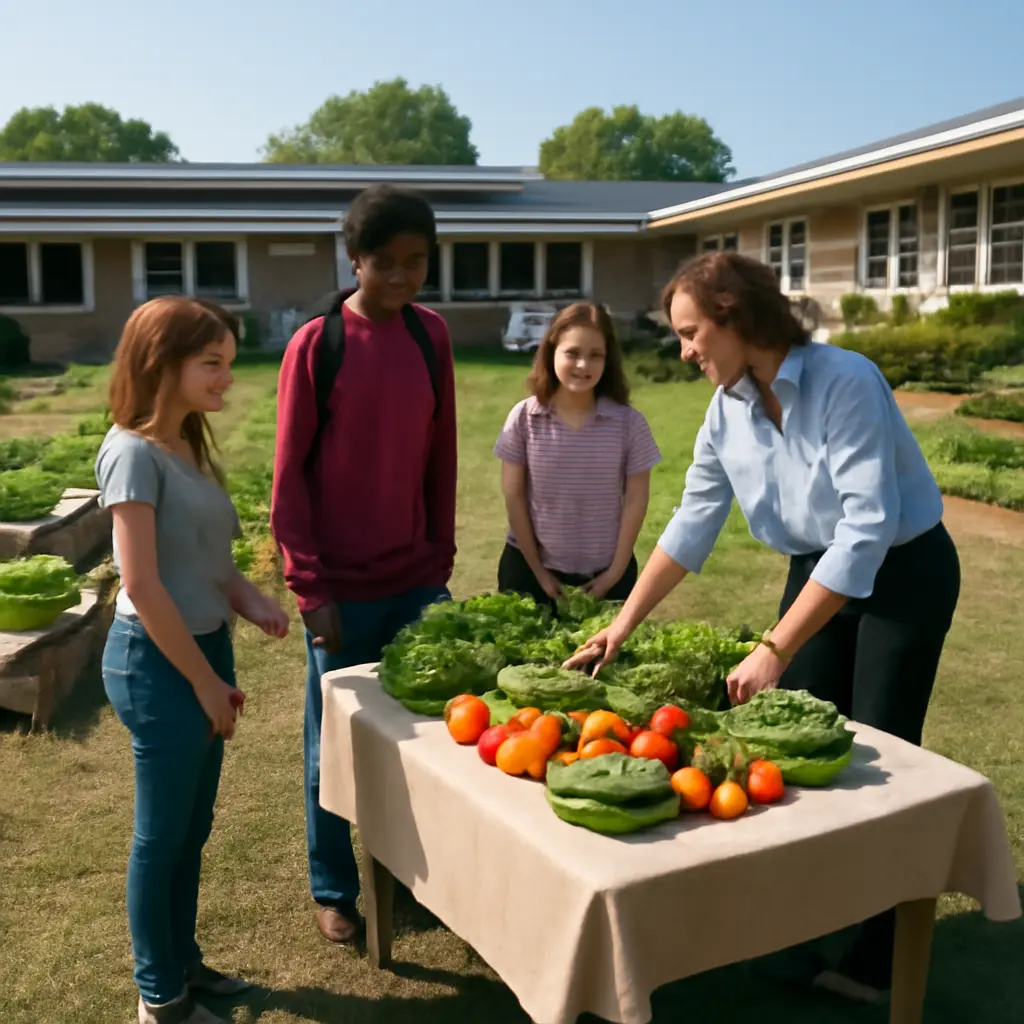
School pantries and community fridges can provide short-term support, while gardens and cooking programs can build food skills and connect students with fresh produce. These initiatives are most effective when they complement—not replace—adequate meal programs and household food assistance. Partnerships with food banks, growers, health centers, and local agencies can improve supply and referral pathways.
A school garden is an educational and engagement tool, not a substitute for a grocery store or a full meal. Programs should plan for staffing, water, maintenance, seasonal availability, and accessible participation. They should also ask families what foods are culturally meaningful and avoid presenting individual behavior as the cause of structural food-access problems.
Changing the Local Food Environment
Long-term progress requires improving access beyond school property. Local governments, schools, businesses, and community groups can work together on transportation, store availability, affordability, and neighborhood food options. Since food deserts are shaped by overlapping economic and geographic conditions, no single intervention fits every community.
Healthy retail, mobile markets, and transit access
Healthy-retail initiatives support stores in stocking and promoting affordable nutritious foods. Mobile markets and produce stands can bring food closer to residents, while transit planning can make existing stores more reachable. The USDA’s Healthy Food Financing Initiative has supported projects intended to improve access to healthy food in underserved communities through financing and technical assistance.
Retail investment should be designed with residents and evaluated for affordability, product quality, and sustained use—not simply counted as a new store opening. Schools can contribute by sharing local needs assessments, hosting community markets where appropriate, and coordinating with municipal planning and public-health departments. Any partnership should protect students’ privacy and avoid turning school grounds into an unregulated sales channel.
Community-led planning and culturally relevant food
Community-led planning gives students and families a meaningful role in setting priorities and judging whether solutions work. Listening sessions, student surveys, and advisory groups can reveal barriers that maps miss, such as food prices, language access, dietary needs, or fear of stigma. Including local grocers, tribal organizations, immigrant-serving groups, and food banks can help tailor approaches to place.
The CDC’s Whole School, Whole Community, Whole Child framework emphasizes coordinated support for students’ health and learning. Applied to food access, that means aligning nutrition education, school meals, family engagement, health services, and community partnerships rather than treating them as isolated projects.
Measuring Whether Food-Access Efforts Work
Evaluation shows whether an intervention reaches the intended students and reduces barriers. Schools and partners should establish a baseline, set measurable goals, and review results with the communities affected. A useful dashboard can combine participation, access, experience, and health-related indicators without treating any single measure as proof of impact.
Useful indicators for schools and districts
- Breakfast and lunch participation, including changes by school and grade.
- Access to summer and after-school meals, including site locations and hours.
- Student feedback on meal quality, cultural relevance, stigma, and dining time.
- Food waste, meal costs, and the affordability of nearby nutritious options.
- Family awareness of food benefits, pantries, and community food resources.
- Longer-term indicators, such as attendance or student wellness, interpreted cautiously and alongside other influences.
Where possible, districts should disaggregate results responsibly to identify unequal access, while protecting confidentiality and avoiding small-group disclosures. Data should be paired with interviews and direct feedback: a high meal-participation rate, for example, cannot explain whether students feel welcomed or whether food is adequate for their needs.
Conclusion: Make Healthy Food Access Part of Student Support
Food deserts and related access barriers can undermine students’ health and readiness to learn, but schools and communities have practical tools to respond. Strong school meals provide a daily foundation; summer and after-school programs help maintain continuity; and community-led retail, transit, and food partnerships address barriers beyond campus. The USDA’s finding that millions of people live in low-income, low-access areas—and its report that 13.5% of households experienced food insecurity in 2023—shows why coordinated action remains urgent.
School leaders can begin by reviewing local access data, asking students and families what gets in the way, and strengthening meal participation and summer connections. Districts should then partner with public-health agencies and community organizations, measure outcomes, and adjust programs transparently. Healthy food access is not an optional add-on: it is part of building equitable conditions for students to thrive.
Sources: U.S. Department of Agriculture, Economic Research Service, Food Access Research Atlas, https://www.ers.usda.gov/data-products/food-access-research-atlas/; U.S. Department of Agriculture, Household Food Security in the United States in 2023, https://www.ers.usda.gov/publications/pub-details/?pubid=109895; U.S. Department of Agriculture, National School Lunch Program, https://www.fns.usda.gov/nslp; U.S. Department of Agriculture, School Breakfast Program, https://www.fns.usda.gov/sbp/school-breakfast-program; U.S. Department of Agriculture, Community Eligibility Provision, https://www.fns.usda.gov/cn/community-eligibility-provision; U.S. Department of Agriculture, Summer EBT, https://www.fns.usda.gov/summer/sunbucks; U.S. Department of Agriculture, Summer Food Service Program, https://www.fns.usda.gov/sfsp/summer-food-service-program; U.S. Department of Agriculture, Healthy Food Financing Initiative, https://www.rd.usda.gov/about-rd/initiatives/healthy-food-financing-initiative; Centers for Disease Control and Prevention, School Health Guidelines to Promote Healthy Eating and Physical Activity, https://www.cdc.gov/healthyschools/npao/strategies.htm; Centers for Disease Control and Prevention, Whole School, Whole Community, Whole Child, https://www.cdc.gov/healthyschools/wscc/index.htm; American Academy of Pediatrics, Promoting Food Security for All Children, https://publications.aap.org/pediatrics/article/136/5/e1431/33783/Promoting-Food-Security-for-All-Children