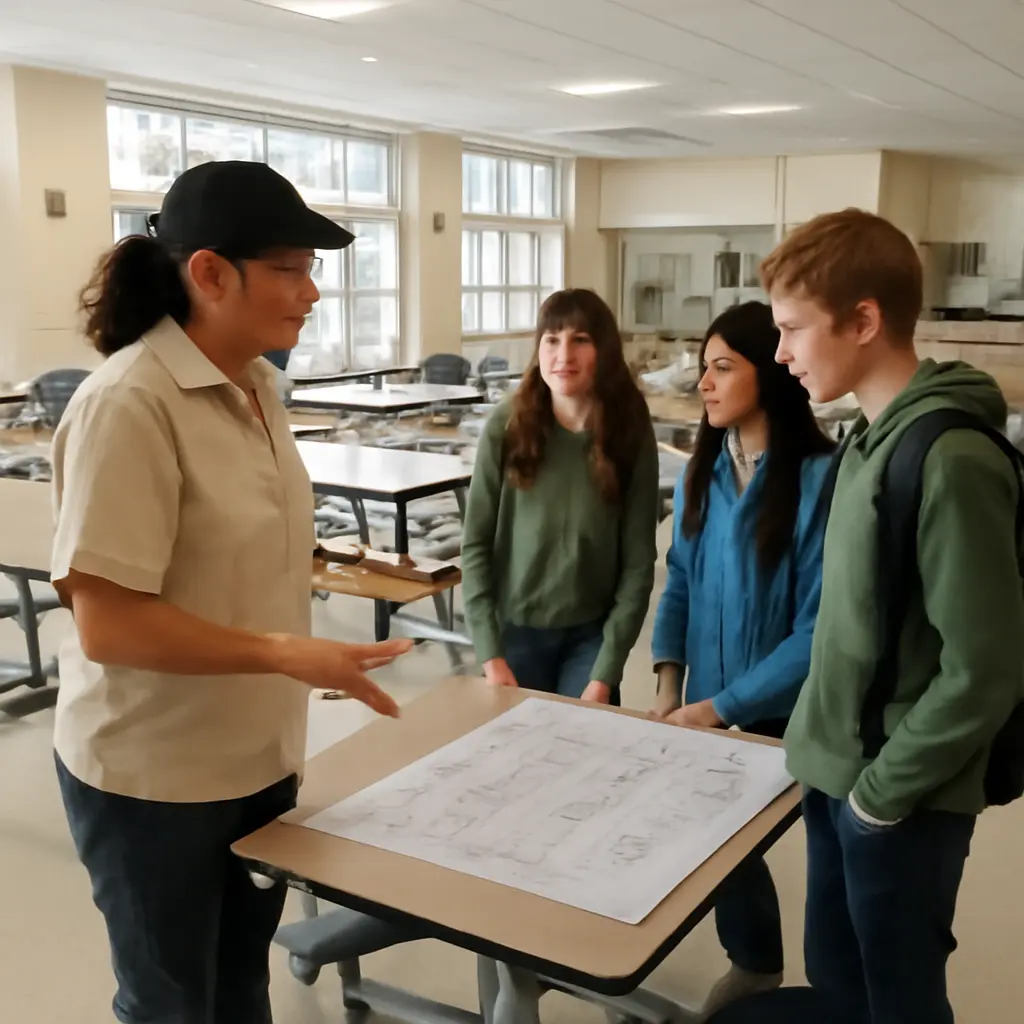
A student-centered cafeteria redesign is a change to the dining space, food, or service shaped by what students say they need and what they actually choose. The most useful redesigns pair appealing, affordable meals with comfortable places to eat, efficient lines, and ways for students to influence decisions. That matters: the U.S. Department of Agriculture’s 2022–23 School Nutrition and Meal Cost Study found that 26% of students participating in the school lunch program said they did not like the taste of the food. Research and federal guidance also point to the value of student input, pleasant dining environments, and reliable access to nutritious meals. Together, these findings suggest a practical starting point: ask students, test changes, measure results, and improve the cafeteria around their experience.
Student-centered cafeteria redesign: definition and design priorities
“Student-centered cafeteria redesign” is a practical description, not a single standardized term with one authoritative definition. In this article, it means planning changes to a school dining environment around students’ preferences and needs while meeting nutrition, safety, accessibility, and budget requirements. The Institute of Child Nutrition’s guidance on Smarter Lunchrooms describes evidence-based strategies that make healthier choices more visible and convenient; it does not define the full concept of cafeteria redesign. The distinction matters: a redesign should improve the whole experience, not just the appearance of the room.
The main parts of that experience are connected: food students want to eat, service that leaves enough time to eat, a space where they can sit comfortably, and feedback systems that show students their views matter. For example, an attractive menu cannot compensate for a queue that consumes most of lunch. Likewise, a quieter room may not feel welcoming if students have no choice of seating or cannot find familiar, appealing food.
Food students will choose
A student-focused menu balances nutrition standards with taste, familiarity, variety, and cultural relevance. The USDA’s School Nutrition and Meal Cost Study provides a useful warning: in the 2022–23 school year, 26% of students who took part in the National School Lunch Program reported that they did not like the taste of the food. This is a reported perception, not a measure of how much food was eaten or wasted, but it underscores why menu decisions should be checked with students instead of relying on adult assumptions.
Schools can offer student taste tests, rotate a limited number of student-selected dishes, and collect quick feedback on taste, temperature, portion size, and variety. They should also keep dietary needs in view, including allergies and medically necessary accommodations. Student choice does not mean abandoning nutrition requirements; it means finding appealing ways to meet them.
Dining space, comfort, and belonging
The physical dining environment includes seating, noise, lighting, cleanliness, room layout, and whether students can find a place where they feel comfortable. These details influence whether the cafeteria feels usable and welcoming, although a particular décor change cannot guarantee improved behavior or nutrition. A school can start with low-cost trials: rearrange tables to create different group sizes, mark accessible routes clearly, add a quieter seating area where feasible, and ask students what makes the room comfortable or stressful.
Belonging also depends on how students are treated and whether the space works for different ages, mobility needs, and social preferences. A redesign should avoid stigmatizing students who receive meal assistance or need accommodations. Student observation and confidential feedback can reveal problems that a floor plan alone will not show.
Lines, timing, and the opportunity to eat
Operational design covers the route from entering the cafeteria to selecting food, paying or checking in, finding a seat, and returning to class. Long waits can leave students with little time to eat, even when food and seating are adequate. The Centers for Disease Control and Prevention’s school nutrition guidance recommends ensuring students have adequate time to eat after being served; schools should therefore assess actual seated eating time, rather than treating the scheduled lunch period as the time available for eating.
Useful measures include queue length at different points in the lunch period, time from arrival to receiving a meal, and time remaining once a student sits down. Schools can test changes such as opening additional serving points, adjusting menu layouts, or staggering release times, then compare results across comparable lunch periods. Any change should preserve safe food handling and equitable access.
Student voice improves cafeteria redesign decisions
Student voice means giving students a meaningful, accessible way to shape decisions and showing how their input affected the result. It is different from asking for opinions after plans are final. The CDC’s Whole School, Whole Community, Whole Child framework treats student engagement as part of a supportive school environment, while USDA and Institute of Child Nutrition resources encourage schools to use feedback and customer-focused practices in meal programs. These frameworks support participation as a sound planning approach, not a guarantee that any single consultation method will increase participation or meal uptake.
Surveys, focus groups, and observation
A cafeteria survey can gather broad preferences; a focus group can explain why students hold them; and observation can identify practical barriers, such as confusing signs or bottlenecks. Using more than one method helps avoid treating the loudest or most available students as representative of everyone. Questions should be specific: “How long did you wait?” or “Which of these meals would you choose?” is more actionable than asking whether students like the cafeteria overall.
Participation should include students across grade levels and, where possible, students with different dietary, accessibility, and cultural needs. Keep surveys short, provide accessible formats, and explain what the school can and cannot change. Report back on the findings so students can see that their time was respected.
Student taste tests and menu pilots
Taste tests let students compare proposed dishes before a school commits to a larger menu change. A simple pilot can record how many students sample a dish, how they rate it, and whether they select it when it becomes a menu option. When possible, compare results with a similar meal period and account for factors such as menu availability and attendance; sampling feedback alone does not establish that a dish will remain popular over time.
A student advisory group can help select recipes, review menu names, and communicate findings to peers. The group should advise rather than carry responsibility for nutrition compliance, food safety, or purchasing decisions, which remain with qualified school staff.
Closing the feedback loop
A feedback loop means collecting input, making a visible response, and checking whether the change helped. Schools might post a simple “You said; we tried” update, such as noting that students requested a second serving station and reporting what happened after a trial. If a suggestion cannot be adopted, explain the reason plainly—for example, cost, staffing, equipment, or nutrition requirements—and invite other ideas.
This approach makes participation more credible and helps distinguish a popular idea from an effective one. A change that students like but that creates unsafe crowding needs revision; a change that meets operational needs but students cannot navigate also needs improvement.
Measure cafeteria redesign results before scaling up
Evaluation compares the cafeteria’s starting conditions with what happens after a change. A school should identify a small set of measures before launching a redesign, gather baseline information, and review results after a defined trial. The measures below are practical options, not universal benchmarks: a school should interpret them in light of its own enrollment, schedule, staffing, and meal program.
Track participation, selection, and plate waste
Meal participation counts how many students take a school meal; selection records what they choose; and plate-waste checks estimate what is left uneaten. Together, these measures can show whether a menu or service change is associated with a different dining experience. They should not be treated as interchangeable: a participation increase does not prove that students liked every item, and waste alone does not explain why food was left.
For a useful comparison, record the same information for similar days or menu cycles before and during the pilot. Note changes in attendance, menu offerings, and service arrangements that could affect results. Student comments can help explain the numbers—for instance, whether a dish was unpopular, hard to reach, or served at an inconvenient temperature.
Check access, time, and student experience
A balanced evaluation includes measures beyond meal counts: waiting time, time seated to eat, route accessibility, cleanliness, and brief student ratings of comfort or satisfaction. Collect feedback across different lunch periods and student groups to identify whether a change helps some students but creates barriers for others. The CDC’s school-health resources emphasize supportive environments; these local measures help a school see how its own space is functioning.
Use pilots to control cost and risk
A pilot is a limited test before a school invests in a permanent renovation or broad menu change. It might involve rearranging furniture for one week, trying a new line layout, or serving a student-tested recipe on selected days. Small trials make it easier to spot staffing, equipment, or crowd-flow problems while changes are still reversible.
Before scaling up, compare the results with the goals set at the start. If the trial improves one measure but worsens another, revise it and test again. For example, a faster service route is not a clear success if it reduces accessible seating or leaves students with less time to eat.
A practical roadmap for schools
The most workable redesign process moves from listening to testing and then to evidence-based decisions. It can be adapted to a small cafeteria refresh or a larger facilities project.
- Map the current experience: observe queues, seating, noise, menu access, and the time students have to eat.
- Ask a diverse group of students and school staff what works and what gets in the way.
- Choose a few priorities that are specific and feasible, such as reducing a bottleneck or testing student-selected recipes.
- Set baseline measures and define how success will be judged before changes begin.
- Run a small pilot, collect both operational data and student feedback, and make adjustments.
- Share results with students, families, and staff, then decide whether to expand, revise, or stop the change.
Conclusion: redesign around the student experience
A cafeteria redesign that students care about connects appealing food, comfortable and inclusive spaces, efficient service, and authentic student voice. The USDA finding that 26% of school lunch participants in 2022–23 disliked the taste of the food reinforces the need to test menu choices with students, while CDC and Institute of Child Nutrition guidance supports attention to the dining environment, adequate eating time, and customer feedback. Schools can act without beginning with a major renovation: listen, pilot modest changes, measure what happens, and report back. The next step is to form a representative student feedback group and choose one improvement to test during a typical lunch period.
Sources: U.S. Department of Agriculture, Food and Nutrition Service, School Nutrition and Meal Cost Study, School Year 2022–23, https://www.fns.usda.gov/research/cn/school-nutrition-meal-cost-study; Centers for Disease Control and Prevention, School Nutrition, https://www.cdc.gov/school-health-conditions/nutrition/index.html; Centers for Disease Control and Prevention, Whole School, Whole Community, Whole Child (WSCC), https://www.cdc.gov/whole-school-community-child/about/index.html; Institute of Child Nutrition, Smarter Lunchrooms, https://theicn.org/smarter-lunchrooms/