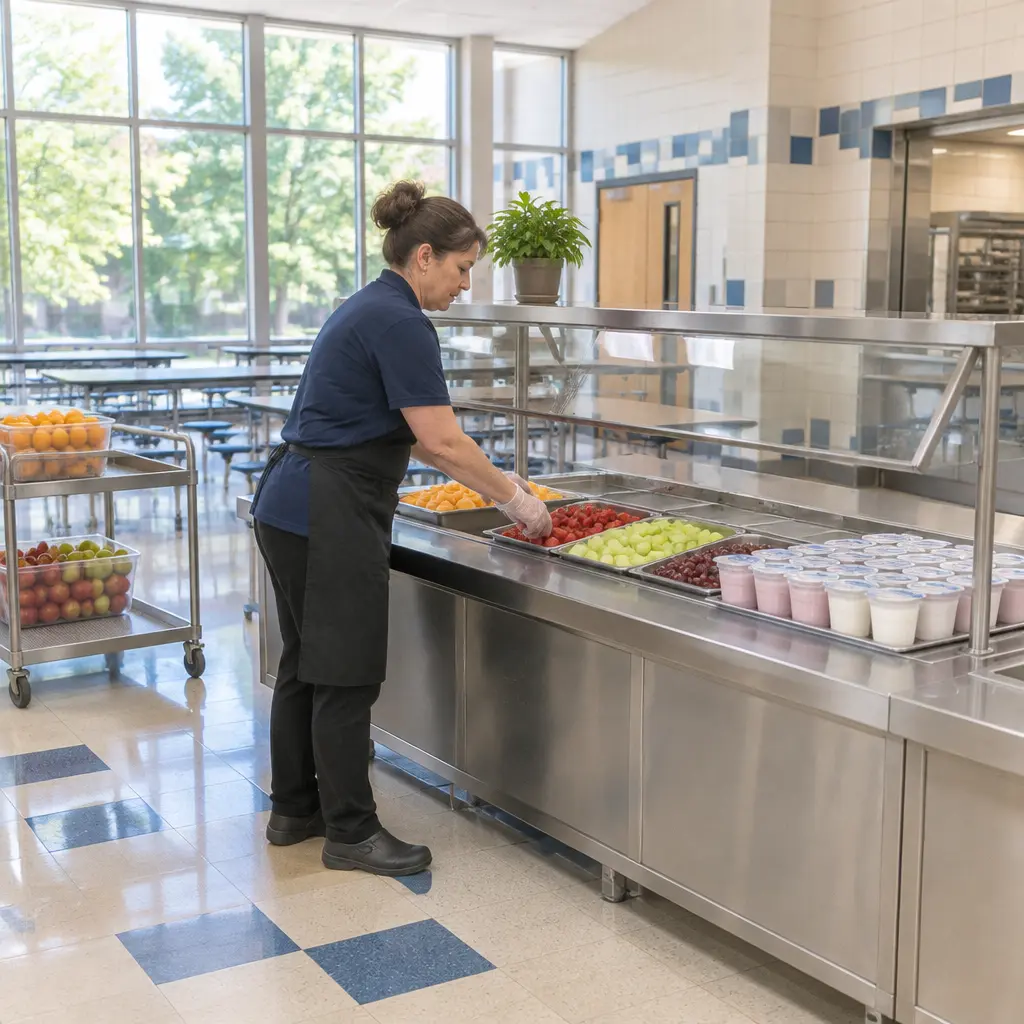
Healthy dessert alternatives in school cafeterias are foods that satisfy students’ preference for a sweet finish while providing more nutrient-dense ingredients and less added sugar than many conventional desserts. Practical options include fruit-based treats, yogurt with fruit, and whole-grain baked goods served in sensible portions. These choices matter because children’s diets are linked to lifelong health: the U.S. Centers for Disease Control and Prevention reports that obesity affected about 1 in 5 U.S. children and adolescents in 2017–2020. Cafeterias can make healthier desserts appealing by combining sound nutrition, student feedback, food-safety practices, and appealing presentation.
What Healthy Dessert Alternatives Mean in School Cafeterias
“Healthy dessert” is not a single regulated food category. The U.S. Department of Agriculture (USDA) defines school meal requirements through nutrition standards that address components such as fruits, vegetables, grains, milk, calories, and limits on saturated fat and sodium. For cafeteria planning, a healthy dessert alternative can be understood as a sweet or dessert-like item that fits the meal program’s applicable standards and contributes useful nutrients—such as fiber, fruit, or calcium—without relying heavily on added sugars.
The distinction matters: a dessert can contain fruit and still be high in added sugar, while a naturally sweet whole fruit may meet students’ desire for something sweet with no added sugar. The CDC identifies frequent consumption of foods and drinks high in added sugars as a concern for children’s diets. The Dietary Guidelines for Americans, 2020–2025 recommend that people age 2 and older keep added sugars below 10% of daily calories; children under age 2 should avoid added sugars.
Fruit-based desserts
Fruit-based desserts use whole, fresh, frozen, or canned fruit as the main ingredient. Examples include sliced apples with cinnamon, fruit cups packed in water or 100% juice, baked pears, and unsweetened applesauce. Whole fruit supplies fiber and naturally occurring sugars; choosing fruit without sugary syrup helps limit added sugar. USDA school meal guidance also treats fruit as a meal component, so menu planners should check how a dessert-style fruit serving fits the school’s meal pattern and service rules.
Yogurt and other dairy-based options
Yogurt with fruit is a dessert-like option that can provide protein and calcium, but flavored products may contain substantial added sugar. Cafeterias can compare Nutrition Facts labels, select lower-sugar products, and add fresh or frozen fruit for sweetness. USDA standards for school meals include requirements for milk and allow crediting certain yogurt products under specified conditions; schools should follow current program guidance and account for allergies, lactose intolerance, and nondairy meal accommodations.
Whole-grain baked treats and portion-aware choices
Whole-grain muffins, oat bars, and fruit crisps can offer a familiar treat while contributing whole grains. “Whole grain” alone does not make a product low in sugar, so recipes and product labels still need review. The USDA’s Smart Snacks in School standards apply to foods sold to students outside reimbursable meals during the school day, including many à la carte sales; they set nutrition criteria that include limits for calories, sodium, fats, and total sugars. Schools should determine which rules apply to each item and setting before placing it on sale.
How Cafeterias Can Select and Serve Healthy Dessert Alternatives
Once schools identify suitable dessert categories, the next step is to turn nutrition goals into choices students will actually eat. A successful menu balances standards, cost, kitchen capacity, cultural preferences, and student acceptance. Offering a healthier item is not enough if it is unfamiliar, poorly presented, or routinely discarded.
Use nutrition standards and label checks
Menu planners should verify ingredients, serving size, added sugars, and applicable school-meal or Smart Snacks requirements. USDA’s school meal standards are designed to support balanced meals, while Smart Snacks rules govern many foods sold separately during the school day. Because the rules differ by program and sales context, food-service directors should consult current USDA guidance, state agencies, and district policy rather than assuming that one standard applies to every dessert.
Make the healthier choice appealing and culturally relevant
Taste, appearance, and familiarity influence whether students choose and eat a food. Schools can use student taste tests, surveys, and limited pilots to compare recipes before wider rollout. They can also incorporate seasonal and culturally familiar fruits, offer attractive color combinations, and give desserts clear, appealing names. The USDA’s Team Nutrition resources encourage schools to engage students and promote nutritious foods through supportive school environments.
Plan for cost, storage, and food safety
A feasible alternative must fit purchasing budgets, equipment, labor, and safe holding requirements. Whole fruit can reduce preparation needs, while yogurt parfaits require refrigeration and careful control of allergens and cross-contact. Schools can compare seasonal purchasing, frozen fruit, and approved commodity foods, then monitor participation and plate waste. These operational measures help distinguish a promising recipe from one that is sustainable at district scale.
Evidence, Evaluation, and Real-World Application
Nutrition policy and student response should be evaluated together. A school may meet a nutrition target yet fail to improve eating habits if students reject the menu item. Conversely, a popular recipe can be refined to reduce added sugar or improve whole-grain content while retaining the qualities students enjoy.
Measure selection and waste
Cafeterias can track how often an item is selected, how much is eaten, and how much is discarded. Comparing these measures before and after a menu change helps schools identify whether the issue is taste, portion size, timing, or presentation. Results can guide recipe adjustments and purchasing decisions; they should be interpreted alongside student feedback and program requirements.
Use school nutrition initiatives as implementation models
USDA Team Nutrition provides materials for schools to support healthy eating and improve the cafeteria environment, including menu and promotion resources. These tools can help food-service teams introduce fruit-forward desserts, test recipes, and communicate choices to students and families. Districts can adapt the approach to local preferences while checking that recipes meet current meal-pattern, food-safety, and procurement requirements.
A useful illustration is a cafeteria replacing a highly sweetened packaged treat on selected days with seasonal fruit, unsweetened applesauce, or a lower-sugar yogurt-and-fruit cup. The school can pilot the options, record selection and waste, ask students what they prefer, and revise the menu. This is an implementation example rather than a claim that one specific substitution produces a guaranteed health outcome.
Conclusion: Making Healthy Desserts Work for Students
Healthy dessert alternatives in school cafeterias include fruit-based treats, carefully selected yogurt options, and whole-grain baked goods. Their value depends on more than ingredients: schools must apply the relevant USDA standards, consider added sugars and portions, provide safe storage, and make choices attractive and culturally relevant. Student feedback, sales data, and plate-waste checks can show whether a menu change works in practice.
School nutrition teams can begin with a small taste-test pilot, compare ingredient labels, and involve students in selecting recipes. For further guidance, consult current USDA school meal and Smart Snacks resources, CDC information on added sugars and child health, and the Dietary Guidelines for Americans. Thoughtful dessert planning can support healthier school food environments while preserving the enjoyment students expect from a sweet finish.
Sources: U.S. Department of Agriculture, Food and Nutrition Service, School Meals, https://www.fns.usda.gov/school-meals; U.S. Department of Agriculture, Food and Nutrition Service, Smart Snacks in School, https://www.fns.usda.gov/cn/smart-snacks-school; U.S. Department of Agriculture and U.S. Department of Health and Human Services, Dietary Guidelines for Americans, 2020–2025, https://www.dietaryguidelines.gov/sites/default/files/2020-12/Dietary_Guidelines_for_Americans_2020-2025.pdf; Centers for Disease Control and Prevention, Childhood Obesity Facts, https://www.cdc.gov/obesity/childhood-obesity-facts/; Centers for Disease Control and Prevention, Get the Facts: Added Sugars, https://www.cdc.gov/nutrition/php/data-research/added-sugars.html; U.S. Department of Agriculture, Food and Nutrition Service, Team Nutrition, https://www.fns.usda.gov/tn.