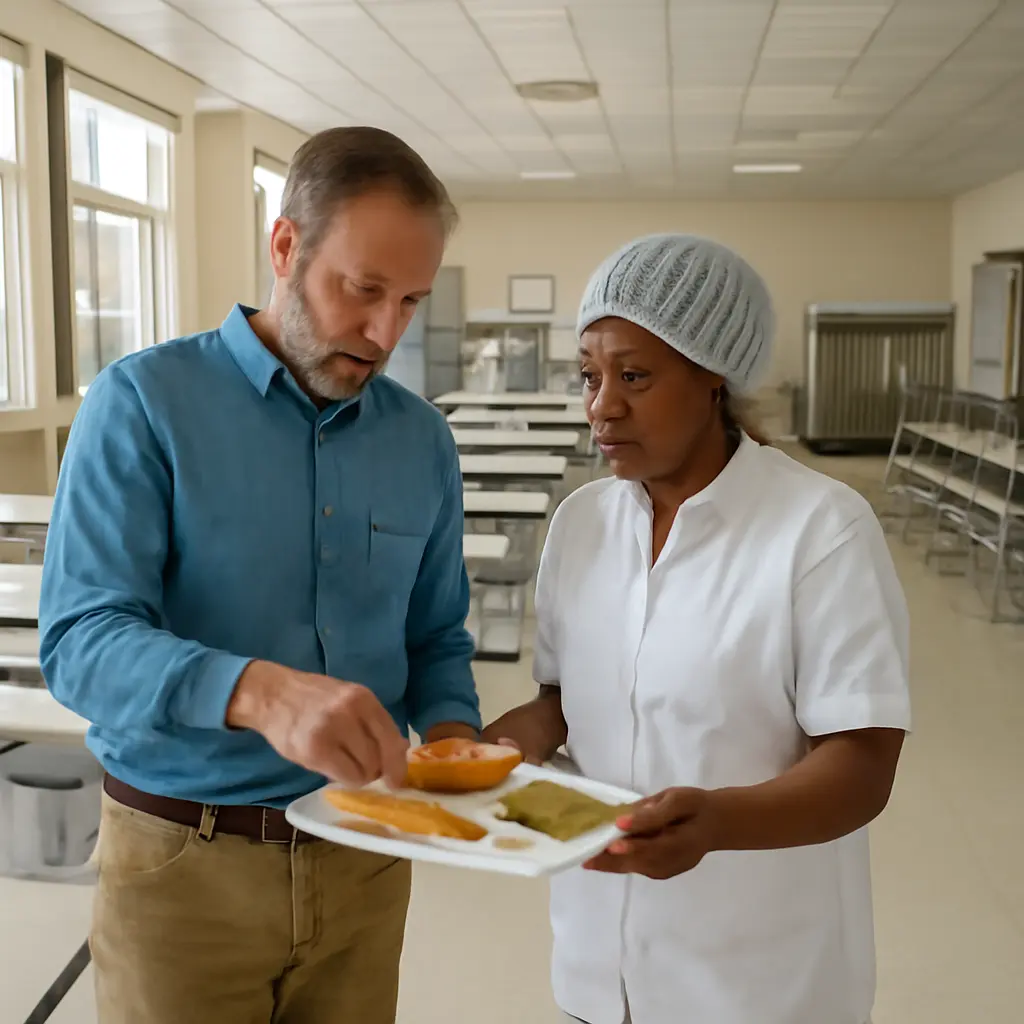
School meal programs provide food to millions of children, but updating them is more complex than changing a menu. A successful update must comply with nutrition standards, fit school budgets and kitchen capacity, work for students with different needs, and earn their acceptance. Common mistakes include planning without student input, overlooking implementation costs, treating compliance as the whole goal, and failing to measure results. These issues matter at scale: the U.S. Department of Agriculture’s school meal data show that the National School Lunch Program served about 30 million children on an average school day in fiscal year 2023. Thoughtful planning can protect access while improving nutrition, participation, and the daily dining experience.
School meal program updates require more than menu changes
A school meal program is the coordinated system through which a school or district plans, prepares, serves, and evaluates meals for students. The USDA defines the National School Lunch Program as a federally assisted meal program operating in public and nonprofit private schools and residential childcare institutions. In practice, an update can affect menus, procurement, recipes, staffing, equipment, service schedules, student communication, and reimbursement.
That breadth explains why a change that looks straightforward on paper can fail in the cafeteria. USDA school meal programs must meet federal requirements, including nutrition standards, while districts also have to manage local budgets and operational limits. The most reliable approach treats an update as a service redesign: establish the intended outcomes, involve the people affected, test changes, and monitor both meal quality and access.
Planning mistakes weaken school meal program updates
Planning mistakes occur when decision-makers define an update too narrowly—for example, as a menu revision rather than a change to the entire meal-service system. Relevant categories include weak needs assessment, limited student engagement, and insufficient attention to kitchen capacity. Addressing these issues early can prevent expensive revisions and avoidable declines in participation.
Mistake: changing menus without asking students
Student engagement means gathering and using feedback from the children who eat the meals. Skipping it can leave districts with nutritious offerings that students do not choose, increasing plate waste and weakening participation. Feedback can come from student taste tests, cafeteria observation, short surveys, student councils, or structured conversations with families.
Taste testing is useful when it happens before a district commits to large purchases or a district-wide rollout. Ask students about flavor, temperature, appearance, portion size, and convenience—not just whether they “like” a dish. The USDA’s school nutrition resources encourage schools to involve students and communities in improving meals. Feedback should be representative across grade levels and schools, rather than coming only from a small group of volunteers.
Mistake: treating compliance as the entire goal
Regulatory compliance means meeting applicable federal and state requirements, such as meal-pattern and nutrition standards. It is essential, but compliance alone does not establish that a meal is appealing, culturally responsive, accessible, or practical to serve. A program can meet its nutrition requirements and still struggle with low take-up, long lines, or food that students routinely discard.
USDA’s school meal standards cover components such as fruits, vegetables, grains, milk, calories, sodium, and saturated fat. Districts should therefore use compliance as a baseline and add operational and student-centered measures: meals served, participation by school, food waste, student satisfaction, and service time. This wider view helps distinguish a technically compliant change from a successful one.
Mistake: overlooking cultural, medical, and disability-related needs
Inclusive meal planning accounts for differences in culture, religion, food allergies, disabilities, and medically necessary diets. A one-size-fits-all menu may unintentionally exclude students or make it difficult for them to identify a suitable meal. Schools should coordinate with families, nutrition professionals, and relevant district staff, and follow applicable accommodation and food-safety procedures.
This is also a communication issue: families need clear, accessible information about ingredients, substitutions, and how to request support. A menu update should be reviewed for the practical availability of alternatives, not simply whether a substitute appears in a written plan.
Operational mistakes make school meal program updates hard to deliver
Operational mistakes arise when a district selects a new menu or service model without checking whether kitchens, staff, suppliers, and schedules can support it. The key related categories are cost and procurement planning, workforce readiness, equipment capacity, and cafeteria logistics. A sound operational review connects each proposed meal to the resources required to prepare and serve it safely.
Mistake: budgeting only for ingredients
Full-cost planning includes more than food purchases. It considers labor, training, equipment, storage, delivery, packaging, utilities, maintenance, and the time needed to prepare recipes. For example, a scratch-cooked item may have a reasonable ingredient cost but require extra staff hours or equipment that a school does not have.
USDA school food authorities operate within reimbursement and other revenue constraints, and local costs vary. Before approving a change, districts should calculate the cost per serving and the labor and equipment needs at each type of school. They should also test whether suppliers can reliably provide the required ingredients and whether substitutions would affect nutrition or allergen controls.
Mistake: rolling out new recipes without training or testing
Recipe standardization is the process of documenting ingredients, quantities, preparation steps, yields, portion sizes, and food-safety controls so a dish can be prepared consistently. Without it, the same meal may differ across schools, and staff may face confusion about preparation time, serving portions, or substitutions.
Districts should pilot recipes in kitchens that reflect different equipment and staffing conditions, train employees, and record production and waste. The Institute of Child Nutrition provides operational training and resources for school nutrition professionals. Treating cafeteria staff as implementation partners—not simply recipients of new instructions—can surface practical problems before a full launch.
Mistake: ignoring lines, schedules, and eating time
Meal access depends partly on whether students have enough time to reach the serving area, select food, and eat. A menu change that adds made-to-order steps or slows service can create queues and reduce the time available for eating. Schools should map the meal journey from classroom release through service and seating, then test changes during realistic conditions.
Useful measures include average wait time, the number of students served per minute, the percentage of students who sit down with a complete meal, and food left uneaten. Where queues are a problem, options may include adjusting release schedules, adding service points, simplifying menu assembly, or using preordering—provided the solution works for students with disabilities and does not create new barriers.
Evaluation mistakes hide whether school meal program updates work
Evaluation mistakes occur when districts launch a change but do not define success, collect useful information, or revise the plan. Evaluation should connect nutrition and meal quality with participation, cost, student experience, food waste, and operational feasibility. It is not an afterthought; it is how a district learns whether a change should be adjusted, expanded, or discontinued.
Mistake: failing to set a baseline and measurable targets
A baseline is a record of conditions before an update, such as participation rates, meal costs, waste levels, or average service time. Without one, a district cannot credibly tell whether results changed after implementation. Targets should be specific and balanced—for example, improving student acceptance without increasing waste or exceeding the available budget.
USDA’s Food and Nutrition Service publishes participation and program data that can help districts understand broader trends, while local records are needed to assess school-level outcomes. Compare results across schools and student groups where appropriate, and protect student privacy. A single district-wide average can conceal that an update works well in one school but poorly in another.
Mistake: using launch-day feedback as the final verdict
A pilot is a limited trial that tests a proposed change before broader implementation. One day of feedback is not enough to reveal how a meal performs over time, as novelty, menu rotation, supply availability, and student routines can affect early results. A more useful pilot runs long enough to capture repeat exposure and ordinary operating conditions.
Track a small set of indicators consistently: participation, student feedback, production records, leftovers, labor time, and ingredient cost. Review findings with students, cafeteria teams, and school leaders, then document what changed in response. This creates a practical feedback loop rather than a one-time consultation.
Mistake: failing to communicate the reason for change
Change communication explains what is changing, why it is changing, when it will happen, and how students and families can respond. Without clear communication, families may be surprised by new menus or procedures, while students may overlook unfamiliar foods or misunderstand how to choose a complete meal.
Use several channels—school announcements, translated family notices, menu pages, cafeteria signage, and classroom or student-group discussions. Explain the benefits plainly without overstating them, identify available accommodations, and provide a route for questions. Communication is most credible when schools report back on the feedback they received and the actions they took.
A practical approach to updating school meal programs
A careful update can be organized into a sequence that makes mistakes easier to catch before they affect every school:
- Define the problem and the outcomes the district wants to improve.
- Review nutrition requirements, local data, kitchen capacity, budgets, staffing, and supplier availability.
- Invite students, families, cafeteria staff, school leaders, and nutrition professionals to help shape options.
- Test recipes and service changes in representative schools, with training and clear food-safety procedures.
- Measure participation, cost, student response, waste, and service time against a pre-change baseline.
- Adjust the plan, communicate the results, and expand only when the approach is workable and inclusive.
A simple table or dashboard can show baseline and post-launch results side by side. For example, districts can chart weekly participation and plate waste for pilot schools, then annotate the chart with menu changes or supply disruptions. Such a visual helps teams spot patterns without treating one unusual day as decisive.
Conclusion: make school meal updates student-centered and measurable
Common school meal program mistakes include changing menus without student input, confusing compliance with overall success, overlooking cultural and medical needs, budgeting only for ingredients, launching without staff preparation, disregarding cafeteria logistics, and failing to evaluate results. These problems are connected: a menu students reject can increase waste, while an operational bottleneck can limit access even when the food itself is well designed.
Because school meals serve millions of children, updates affect nutrition, public resources, and students’ everyday experience. Districts can reduce avoidable failures by listening early, costing the full operation, piloting changes, measuring outcomes, and communicating transparently. School nutrition teams can begin by reviewing one planned change against the checklist above and inviting students and cafeteria staff to identify what needs testing before rollout.
Sources: U.S. Department of Agriculture, Food and Nutrition Service, National School Lunch Program, https://www.fns.usda.gov/nslp; U.S. Department of Agriculture, Food and Nutrition Service, Child Nutrition Tables, https://www.fns.usda.gov/pd/child-nutrition-tables; U.S. Department of Agriculture, Food and Nutrition Service, Nutrition Standards for School Meals, https://www.fns.usda.gov/cn/nutrition-standards-school-meals; U.S. Department of Agriculture, Food and Nutrition Service, School Nutrition, https://www.fns.usda.gov/cn; Institute of Child Nutrition, https://theicn.org/