Schools are using wellness programs that pair everyday supports—such as counseling, movement, nutritious meals, and staff training—with a coordinated plan for student health. School wellness programs are organized efforts to support students’ physical, social, emotional, and behavioral well-being, rather than one-off assemblies or stand-alone lessons. Examples in practice include the CDC’s Whole School, Whole Community, Whole Child framework, the Alliance for a Healthier Generation’s school-health model, and evidence-based social-emotional learning and mental-health supports. These approaches matter: the CDC’s 2023 Youth Risk Behavior Survey found that 40% of U.S. high school students experienced persistent feelings of sadness or hopelessness during the previous year. Effective programs respond through connected services, supportive school environments, and partnerships with families and communities.
Whole-School Wellness Programs Coordinate Student Health Supports
The CDC defines its Whole School, Whole Community, Whole Child (WSCC) model as a framework that brings together education and health to support each student’s development. It connects ten components, including health education, physical education and activity, nutrition, counseling and social services, school climate, employee wellness, and family and community involvement. The central idea is coordination: a nutrition lesson, access to healthy meals, and a welcoming cafeteria reinforce one another more effectively than isolated activities.
This model is a framework, not a single packaged intervention with a guaranteed outcome. Schools adapt it to their needs, resources, and local health data. The CDC’s School Health Profiles surveys provide information about school health policies and practices, while the agency’s school-health guidance emphasizes assessing needs, selecting evidence-informed actions, and reviewing implementation. A practical measure of success is whether students can consistently access the intended support—not just whether a school held an event.
Coordinated school health and wellness councils
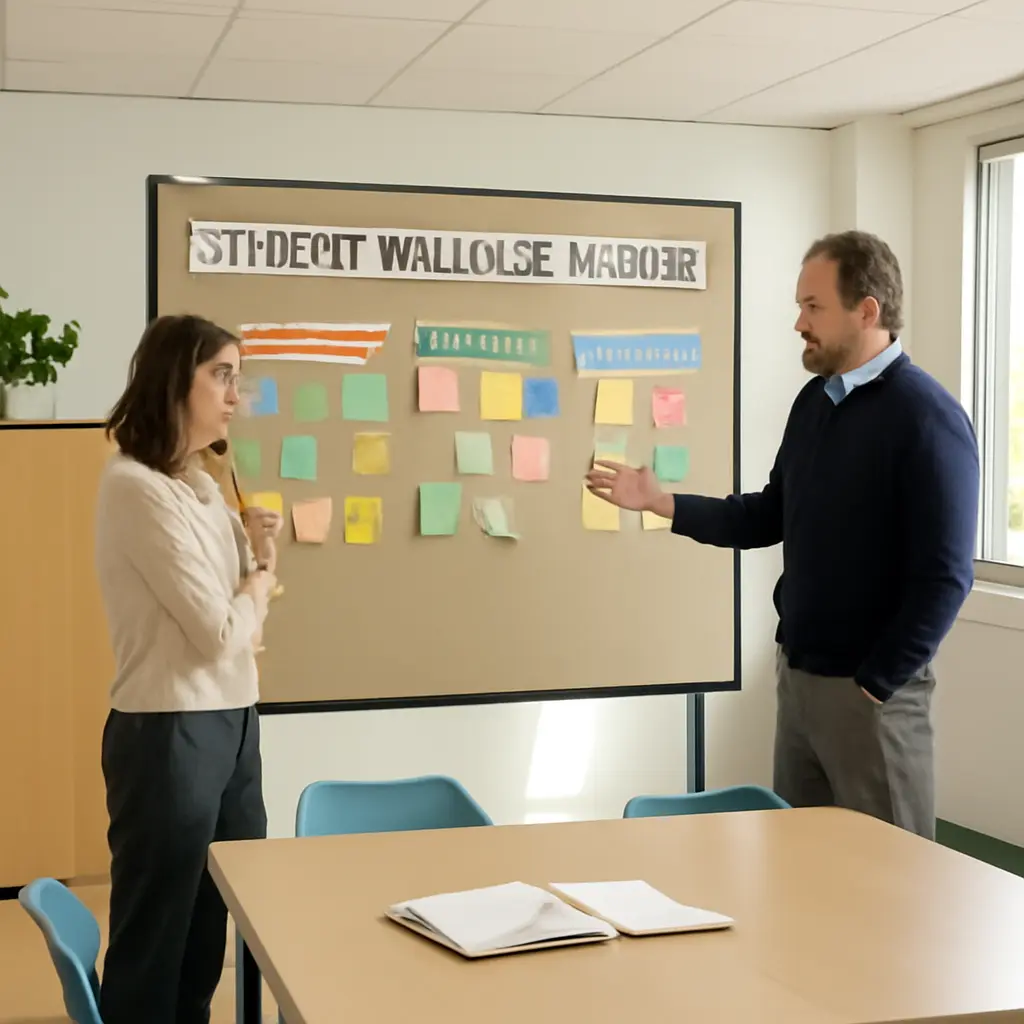
A school wellness council is a group that helps assess needs, set priorities, and coordinate health policies. Members may include administrators, teachers, school nurses, food-service staff, students, caregivers, and community partners. The federal Local School Wellness Policy requirement applies to districts participating in federal child-nutrition programs; the U.S. Department of Agriculture requires those districts to maintain a written policy and involve stakeholders in its development, implementation, and review.
The Alliance for a Healthier Generation’s Healthy Schools Program offers schools tools for assessing and improving practices in areas such as nutrition, physical activity, and staff wellness. Its approach illustrates how a school can turn broad aspirations into a practical improvement process: identify a gap, choose an action, assign responsibility, and check progress. A council is most useful when it has a clear role, regular meetings, and a way to hear from students and families who are often missed by routine surveys.
School nutrition and physical-activity programs
Nutrition and movement programs include school meals, nutrition education, recess, physical education, and opportunities to be active during the school day. The USDA’s National School Lunch Program served about 29.6 million children per school day in fiscal year 2023, making school meals a major, established platform for supporting student nutrition. Federal nutrition standards and local wellness policies shape what schools serve and how they promote healthy choices.
The CDC recommends that children and adolescents ages 6–17 get at least 60 minutes of physical activity daily. Schools cannot provide all of that activity, but they can contribute through quality physical education, active recess, classroom movement breaks, and safe routes to school. These supports work best when activity is accessible to students with disabilities and welcoming to students of different skill levels, rather than framed only around competition or athletic performance.
Mental-Health Services Strengthen School Wellness Programs
School mental-health programs range from universal supports for every student to targeted counseling and individualized clinical services. The CDC’s 2023 Youth Risk Behavior Survey reported that 40% of high school students experienced persistent sadness or hopelessness, and 20% seriously considered attempting suicide. These figures describe a serious public-health concern, but they do not mean every student needs the same intervention. Effective school systems match support to need and connect students to qualified help when necessary.
Social-emotional learning and supportive school climate
Social-emotional learning (SEL) develops skills such as recognizing emotions, setting goals, building relationships, and making responsible decisions. The Collaborative for Academic, Social, and Emotional Learning (CASEL) describes SEL as a process through which young people and adults develop those competencies. Schools commonly incorporate SEL through explicit lessons, classroom routines, conflict-resolution practices, and educator modeling.
A 2011 meta-analysis by Joseph Durlak and colleagues examined 213 universal school-based SEL programs involving more than 270,000 students. It found improvements in social-emotional skills, behavior, and academic performance; participating students had an average academic-performance gain equivalent to 11 percentile points compared with control students. That result supports SEL as a promising approach, not a guarantee that every program will produce identical results. Quality of implementation, cultural relevance, and consistency matter.
Tiered counseling and referral systems
A tiered mental-health system provides universal prevention, additional support for students showing emerging needs, and intensive services or referrals for students requiring individualized care. In schools, this may involve classroom-based prevention, small-group counseling, assessment by a school psychologist or counselor, and referral to community clinicians. The National Center for School Mental Health’s School Health Assessment and Performance Evaluation (SHAPE) resources help schools assess and improve comprehensive school mental-health systems.
A useful program does not rely on a single staff member to identify every concern. Schools can establish clear referral pathways, explain confidentiality limits, train staff to respond appropriately, and identify local crisis and treatment resources. The U.S. Preventive Services Task Force recommends depression screening for adolescents ages 12–18 when systems are in place for accurate diagnosis, effective treatment, and appropriate follow-up. Screening without accessible follow-up care is not a complete wellness program.
Staff and Family Partnerships Help Wellness Programs Last
Wellness efforts are more sustainable when they support the adults and relationships surrounding students. Teachers and other school employees influence classroom climate and can help students connect with services, while caregivers and community organizations extend support beyond school hours. The CDC’s WSCC framework therefore includes employee wellness and family and community involvement as core components, rather than optional extras.
Employee wellness and staff training
Employee wellness includes conditions and supports that help school staff maintain physical and mental health, such as access to wellness resources, manageable procedures, and a safe workplace. Staff training can also help adults recognize distress, respond to disclosures, use supportive classroom practices, and make referrals. Training should fit staff roles: educators are not substitutes for mental-health clinicians, but they can know how to connect a student with appropriate help.
The National Academies’ 2019 report on the promise of social and emotional learning emphasized the role of supportive environments and adults in students’ development. In practice, schools can pair professional learning with staff input, clear referral protocols, and access to employee assistance or other appropriate supports. A program that adds responsibilities without time, training, or leadership support may be difficult to maintain.
Family and community partnerships
Family and community partnerships connect school programs with caregivers, health providers, youth organizations, and local services. Schools may use multilingual communications, family wellness events, community-provider referrals, or shared-use agreements that make school facilities available outside school hours. These partnerships can reduce access barriers, but they work best when families help shape the program rather than being treated only as recipients of information.
The CDC’s WSCC framework treats family engagement as a two-way relationship: schools communicate and listen, while families contribute knowledge about students’ needs and strengths. Practical indicators include whether communications are accessible, whether families know how to request support, and whether referrals lead to services. Schools should protect student privacy and make participation feasible for families facing language, transportation, scheduling, or technology barriers.
How Schools Can Judge Whether Wellness Programs Are Working
A school can evaluate wellness by tracking both implementation and outcomes. Implementation measures show whether planned activities actually reach students; outcome measures examine changes in areas such as attendance, school climate, access to counseling, or physical activity. No single metric captures student well-being, and changes should be interpreted alongside local context rather than attributed automatically to one program.
- Document participation, service availability, and whether students from different groups can access supports.
- Use anonymous climate surveys and other appropriate feedback to understand students’ experiences.
- Review attendance, referrals, and service follow-up while protecting confidentiality and avoiding stigmatizing comparisons.
- Ask students, caregivers, and staff what is working and what remains difficult to access.
- Use findings to adjust the program, then repeat the assessment on a reasonable schedule.
The CDC’s School Health Index is one example of a self-assessment tool schools can use to review health and safety policies and practices. Results can help a school prioritize improvements, but an assessment is a planning aid—not proof of impact by itself. Strong evaluation also considers equity, implementation quality, and whether students can reach the services they need.
Conclusion: Build Wellness Into the School Day
Successful school wellness programs connect whole-school coordination with nutrition and physical activity, social-emotional learning, tiered mental-health supports, staff readiness, and family partnerships. The WSCC framework offers a structure for joining these efforts, while research on SEL and public-health data underline why consistent, accessible supports matter. Schools can begin by assessing local needs, involving students and families, assigning clear responsibility, and measuring both reach and results. For further action, review the CDC’s School Health Index, explore USDA wellness-policy requirements, and consult the National Center for School Mental Health’s SHAPE resources when planning or strengthening a program.
Sources: Centers for Disease Control and Prevention, Whole School, Whole Community, Whole Child (WSCC), https://www.cdc.gov/whole-school-community-child/about/index.html; Centers for Disease Control and Prevention, Youth Risk Behavior Survey Data Summary & Trends Report: 2013–2023, https://www.cdc.gov/yrbs/dstr/index.html; Centers for Disease Control and Prevention, Physical Activity Guidelines for School-Aged Children and Adolescents, https://www.cdc.gov/physical-activity-basics/guidelines/children.html; U.S. Department of Agriculture, Local School Wellness Policy, https://www.fns.usda.gov/tn/local-school-wellness-policy; U.S. Department of Agriculture, National School Lunch Program, https://www.fns.usda.gov/nslp; Alliance for a Healthier Generation, Healthy Schools Program, https://www.healthiergeneration.org/take-action/schools; Collaborative for Academic, Social, and Emotional Learning, What Is SEL?, https://casel.org/what-is-sel/; Durlak, J. A., et al., “The Impact of Enhancing Students’ Social and Emotional Learning: A Meta-Analysis of School-Based Universal Interventions,” Child Development, 2011, https://srcd.onlinelibrary.wiley.com/doi/10.1111/j.1467-8624.2010.01564.x; National Center for School Mental Health, School Health Assessment and Performance Evaluation (SHAPE), https://www.theshapesystem.com/; U.S. Preventive Services Task Force, Depression and Suicide Risk in Children and Adolescents: Screening, https://www.uspreventiveservicestaskforce.org/uspstf/recommendation/screening-depression-suicide-risk-children-adolescents; National Academies of Sciences, Engineering, and Medicine, The Promise of Adolescence: Realizing Opportunity for All Youth, 2019, https://nap.nationalacademies.org/catalog/25388/the-promise-of-adolescence-realizing-opportunity-for-all-youth; Centers for Disease Control and Prevention, School Health Index, https://www.cdc.gov/assessing-improving-school-health/school-health-index/index.html.