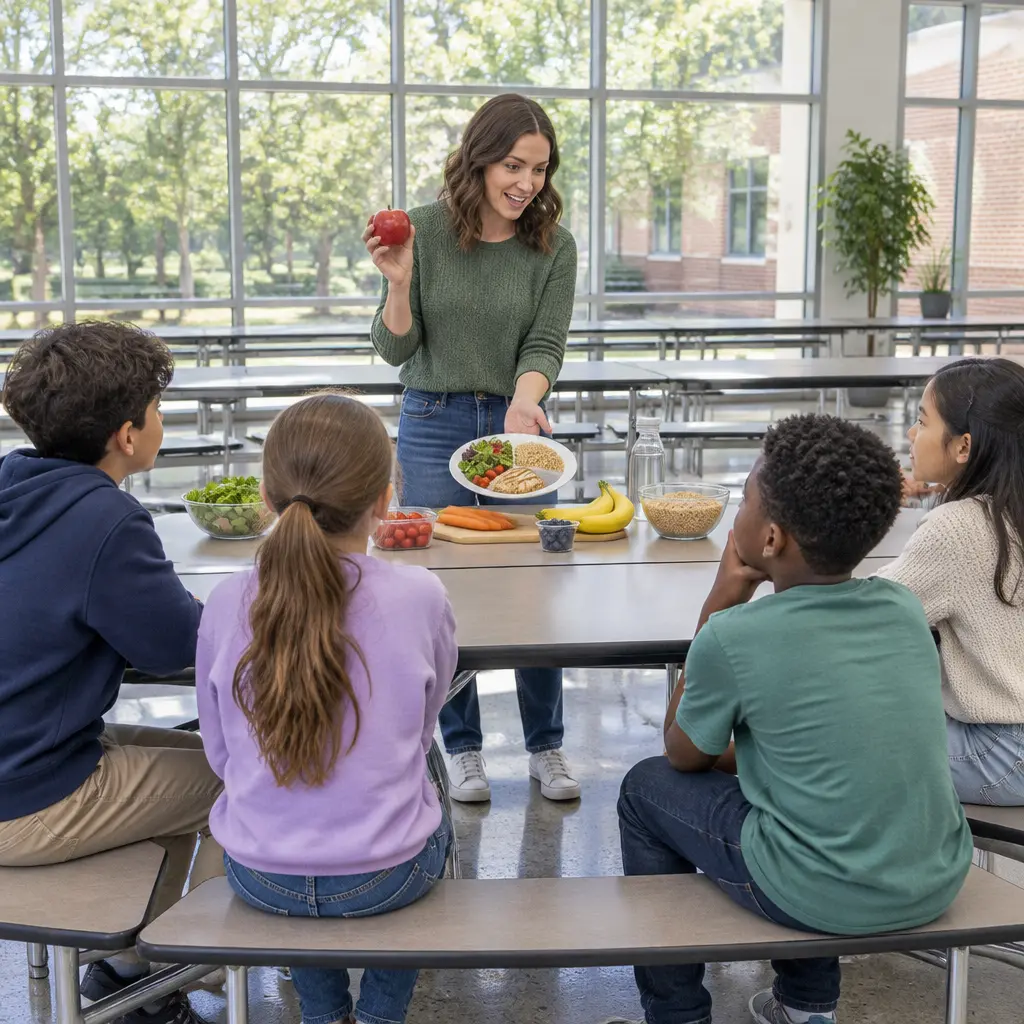
Healthy eating for students means choosing a varied, balanced mix of foods and drinks that supports growth, learning, and long-term health. Teaching its basics is especially relevant because the World Health Organization reports that in 2022, 390 million children and adolescents aged 5–19 were living with overweight, including 160 million with obesity. Students can learn practical principles—variety, balance, nutrient-rich choices, hydration, and food safety—while recognizing that healthy eating should be accessible, culturally respectful, and free from shame. The sections below explain these principles, show how to teach them through school and everyday examples, and offer actions students can use.
Healthy Eating Principles: Variety, Balance, and Nutrient Density
Healthy eating principles are practical guidelines for selecting foods and drinks that meet nutritional needs while supporting health. The U.S. Department of Agriculture’s Dietary Guidelines for Americans, 2020–2025, describes a healthy dietary pattern as one that includes a variety of nutrient-dense foods and beverages within appropriate calorie limits. For students, the central ideas are to eat different kinds of foods, include nourishing options regularly, and limit excess added sugars, saturated fat, and sodium—not to follow a restrictive diet.
These principles connect directly: variety helps provide a range of nutrients, while balance and nutrient density help students build meals that sustain them. The concepts below translate the broad guidance into familiar food groups and everyday choices.
Variety Across Food Groups
Variety means eating foods from different groups and choosing different colors, forms, and sources over time. MyPlate, the USDA’s food-group guide, organizes a general healthy eating pattern around fruits, vegetables, grains, protein foods, and dairy or fortified soy alternatives. No single food supplies everything the body needs, so variety can help students obtain a broader range of nutrients.
A student might combine oatmeal, fruit, and milk or fortified soy beverage at breakfast, then choose beans, vegetables, and rice at lunch. Canned, frozen, and fresh produce can all contribute; the most practical option may depend on cost, availability, and family or cultural preferences. The CDC’s 2019 Youth Risk Behavior Survey found that only about 2% of high school students met its recommendations for fruit and vegetable intake, underscoring the value of making produce familiar and easy to access.
Balance and Nutrient-Dense Choices
Balance means combining foods in a way that supplies energy and nutrients without treating any one meal or food as a test of success. Nutrient-dense foods provide vitamins, minerals, fiber, or other beneficial components relative to their calories. Examples include vegetables, fruit, whole grains, beans, eggs, nuts, fish, and unsweetened dairy or fortified alternatives.
The Dietary Guidelines for Americans recommend limiting added sugars to less than 10% of daily calories for people aged 2 and older, and saturated fat to less than 10% of calories for people aged 2 and older. These are population-level recommendations, not a reason to label foods or students as “good” or “bad.” A useful classroom exercise is to compare two snack labels for serving size, fiber, added sugar, and sodium, then discuss how each could fit into an overall pattern.
Student Nutrition Skills: Hydration, Food Literacy, and Safety
Student nutrition skills are the knowledge and everyday abilities that help learners make informed food choices. They include recognizing hunger and thirst, reading basic food information, preparing simple meals, and handling food safely. These skills put healthy eating principles into practice, while acknowledging that students’ choices are shaped by school meals, family resources, schedules, culture, and food availability.
Hydration and Drinks
Hydration is maintaining enough body water for normal functions. Water is a practical default drink for most students, and milk or fortified alternatives can contribute nutrients as part of meals. The CDC notes that sugary drinks are a leading source of added sugars in the American diet. Teaching students to carry a reusable bottle where permitted and choose water when thirsty can support hydration without implying that thirst or beverage choices are moral failings.
Schools can make this lesson concrete by identifying accessible drinking fountains or refill stations and discussing how heat, activity, and individual needs affect fluid requirements. Students with medical conditions or specific dietary needs should follow guidance from a qualified health professional.
Food Labels and Practical Food Literacy
Food literacy is the ability to understand food information and use it in real-life decisions. The U.S. Food and Drug Administration’s Nutrition Facts label presents information such as serving size, calories, nutrients, and percent Daily Value. The FDA explains that 5% Daily Value or less is considered low and 20% or more is considered high for a nutrient, a quick guide that can help students compare products.
For example, students can compare two breakfast cereals by checking serving size, fiber, and added sugars rather than relying only on front-of-package claims. They can also plan a low-cost snack using available foods, such as fruit with yogurt or whole-grain crackers with hummus, while adapting for allergies, religious practices, and household budgets.
Food Safety and Simple Preparation
Food safety means preventing contamination and reducing the risk of foodborne illness during storage, preparation, and serving. The USDA’s four core steps are Clean, Separate, Cook, and Chill: wash hands and surfaces, keep raw foods separate from ready-to-eat foods, cook foods to safe temperatures, and refrigerate perishables promptly. These routines make nutrition education more useful by helping students prepare food safely at home or in class.
A simple classroom demonstration could have students wash produce, assemble a balanced snack, and identify which ingredients need refrigeration. Any cooking activity should account for allergies, equipment safety, and local food-handling rules.
Healthy Eating Education: School Meals and Inclusive Teaching
Healthy eating education is instruction and supportive practice that help students understand food, develop useful skills, and access nourishing options. It works best when lessons match the food environment students experience. The USDA’s school meal programs provide a real-world setting for learning about balanced meals, while inclusive teaching helps ensure nutrition messages respect students’ backgrounds and circumstances.
School Meals as a Practical Learning Setting
School meals can demonstrate how food groups come together in a familiar setting. The USDA’s National School Lunch Program serves millions of students each school day; USDA reporting for fiscal year 2023 recorded approximately 4.6 billion lunches served. Educators can use menus to identify vegetables, grains, and protein foods, or invite students to describe flavors and preparation methods without pressuring anyone to eat a particular item.
A practical example is a “build-a-plate” activity using the actual school menu. Students can identify food groups, discuss possible substitutions for allergies or dietary needs, and consider how different ingredients reflect local or cultural food traditions. This links classroom concepts with meals students may encounter daily.
Culturally Respectful and Non-Stigmatizing Lessons
Inclusive nutrition education recognizes that food choices are influenced by culture, family practices, disability, food access, and personal health needs. Lessons should avoid body shaming, weight-based assumptions, or the idea that a student’s appearance reveals their health. The CDC’s Whole School, Whole Community, Whole Child framework emphasizes coordinated support for students’ health and learning, including nutrition environments and family engagement.
Teachers can invite examples of familiar meals from different traditions and discuss how ingredients can fit into varied eating patterns. They should avoid asking students to disclose household finances or personal health details. When a student needs individualized nutrition advice, educators can direct the family to a registered dietitian or healthcare professional rather than prescribing a diet.
Putting Healthy Eating Basics into Practice
Students can apply healthy eating basics through small, realistic actions rather than strict rules. A weekly activity might ask learners to plan one breakfast or snack, identify a fruit or vegetable they would like to try, or compare drink options. Families and schools can support these efforts by making water available, offering varied foods, and accommodating allergies and dietary requirements.
A simple visual aid could be a “food group and choice” chart showing examples of fruits, vegetables, grains, protein foods, and dairy or fortified alternatives, alongside water and food-safety reminders. The chart should be presented as a flexible guide, not a scorecard. Progress can be assessed through students’ ability to explain a food label, name safe preparation steps, or plan a varied meal—not through weight or appearance.
Conclusion: Healthy Eating Basics for Students
Healthy eating principles help students understand variety, balance, and nutrient-dense choices; nutrition skills make those ideas practical through hydration, label reading, and food safety; and inclusive school education connects learning with meals and daily life. The statistics on youth food patterns and school meal participation show why accessible, practical instruction matters. Students, families, and educators can take a next step by planning one varied meal, practicing a food-label comparison, or learning a safe preparation skill. For personalized dietary concerns, consult a qualified health professional.
Sources: World Health Organization, “Obesity and overweight,” https://www.who.int/news-room/fact-sheets/detail/obesity-and-overweight; U.S. Department of Agriculture and U.S. Department of Health and Human Services, Dietary Guidelines for Americans, 2020–2025, https://www.dietaryguidelines.gov/; U.S. Department of Agriculture, MyPlate, https://www.myplate.gov/; Centers for Disease Control and Prevention, Youth Risk Behavior Survey Data Summary & Trends Report: 2019–2023, https://www.cdc.gov/yrbs/dstr/index.html; Centers for Disease Control and Prevention, “Get the Facts: Sugar-Sweetened Beverages and Consumption,” https://www.cdc.gov/nutrition/php/data-research/sugar-sweetened-beverages-intake.html; U.S. Food and Drug Administration, “How to Understand and Use the Nutrition Facts Label,” https://www.fda.gov/food/nutrition-facts-label/how-understand-and-use-nutrition-facts-label; U.S. Department of Agriculture, “Four Steps to Food Safety: Clean, Separate, Cook, Chill,” https://www.fsis.usda.gov/food-safety/safe-food-handling-and-preparation/food-safety-basics/four-steps-food-safety; U.S. Department of Agriculture, Food and Nutrition Service, National School Lunch Program, https://www.fns.usda.gov/nslp; Centers for Disease Control and Prevention, Whole School, Whole Community, Whole Child (WSCC), https://www.cdc.gov/whole-school-community-child/